Wednesday, 22 January 2014

Plant Life

Spring is just around the corner and life is showing signs of returning. I seem to have a bigger show of flowers in my small front garden now then later in the Spring the Vibernam smells wonderful, winter jasmine and  witch hazel are blooming and even the snowdrops are beginning to peak out with a little white and I have even heard news that in some areas primroses are beginning to show. Flowers come with their own stories. as described in a letter of thanks from a recent commission made in memory of the new owner's mother, Each Little Bird and Flower

 'My parents appreciated the simple things in life and had to work hard. They enjoyed the countryside and their garden. Mum loved her flowers and especially primroses, which she would take to my Dad when he became ill. She grieved deeply for him for the rest of her life, and sought comfort in things like the blackbird which would look from the shed roof into the kitchen, calling to her until she fed him. Mum’s favourite hymn was “All things bright and beautiful” 

 It is no surprise that our favourite childhood hymns or remembered poems celebrate the Spring season as we await for it to arrive.  These changes will feature in new works being created for exhibition in Europe next year including a guest  show at the 20th anniversary European Patchwork Meeting. Updates will be on my blog soon.


Plantlife has produced a 40 page booklet celebrating a highly successful public participation textile art project involving people from across the UK telling stories of their favourite wildflowers.
Patchwork Meadow

 Patchwork Meadow Cover small   
Detailed below is a page from the book marking a diversity of creative approach one of my favourites is Blackberry Thief by Ilene Sterns the page also includes my Hackney Marsh Edges

Tolpuddle Martyrs Tree by Nigel Costley, Tolpuddle Martyrs Trust is a reminder that flora  has a place in cultural memory, myth and literature as well as marking our seasons and landscape.


http://wildflowereurope.org/wp-content/uploads/2014/01/Tolpuddle.jpg


It was under the sycamore tree in the village of Tolpuddle in the 1830's where farm workers discussed how to form a trade union to defend their meagre wages from further cuts. The tree has become a symbol for democracy and the right for people to join together in unions.

I continue to mark the changes in my local area and beyond in new works and  being made for exhibitions in Europe later in the year. Tea Flora Tales will also be moving on so please contact me if you would like to make a piece to add to this growing collaboration. Below are some Australian pieces and collected scraps.


Monday, 16 December 2013

Fen, Land, Trees and Parks

I have been out and about recently and looking forward to seeing my family in Norfolk,East Anglia over the New Year. 

Marsh Grass Cas Holmes (commission for a retirement present)

3 December saw the 175th birthday Octavia Hill! another East Anglian - National Trust co-founder, visionary, tireless champion of green, open spaces for everyone.Born in Wisbech, Cambridgeshire (1838). When she was 26, she established her first low-income housing project in the slums off of London's Marylebone Road. She also came to see the importance of open spaces after seeing the cramped and overcrowded conditions in which the city's poor were living. She campaigned for the preservation of, as she put it, "a few acres here and there-the hill top enables the Londoner to rise above the smoke, to feel a refreshing air for a little time and to see the sun setting in coloured glory which abounds so in the Earth God made." With that goal in mind, she co-founded Britain's National Trust for Places of Historic Interest and Natural Beauty in 1895. This year marks the 100th anniversary of her death; when she died in 1912, the National Trust had 713 members; it now has 4 million.
Octavia Hill, who said, "The need of quiet, the need of air, the need of exercise [...] the sight of sky and of things growing seem human needs common to all."

Wicken Fen, the first nature reserve acquired by the National Trust- in 1899. Photo by John Hughes, Wicken Fen ranger. www.nationaltrust.org.uk/wicken-fen/

I recently had a visit to the Savill and Heather Gardens part of the Windsor Great Parks. There is still a lot of colour in winter. Loved the 'River of Grass'. It is often difficult to get the time just to 'look' and enjoy the time to investigate something new.


Loved how the spade looks like a miniature landscape


And a reminder that Spring is on its way.


Finally a sketch of Norfolk  reeds and a sketch of grasses by the Stour bring Norfolk and Kent together. You can see more at my exhibition at The Beaney which is on until 12th January.

Monday, 18 November 2013

Red

As we enter the winter months the warmth of the colour red enters our lives. Most famously its significance with the symbol of rememberance  in the poppy and later as the colour of the winter festivities.

 'North Norfolk has long been known as Poppyland after an association made by the Victorian poet Clement Scott in his poem 'The Garden of Sleep'. Despite this, Alexanders were initially elected as the County Flower for Norfolk. However, local supporters demanded a re-vote and out of five possible choices, the poppy won.'
http://www.plantlife.org.uk/wild_plants/plant_species/poppy

In Norfolk we have a saying to Do Different and we did so in retaining the poppy as our symbol.

Poppy in the middle of the road, Preniac, France. 


 And of course remembering the nurses who also served. Detail of 'Roses of No Mans Land'. This piece has red crosses on a background of Belgium and French maps.


Red Rose Hips near the River at Medway. 

Detail of 'Red Barge Sails' shortly to be shown in Urban Nature at the Beaney


Love this use of red in an exploratory piece by a student participating in the Nautical Threads workshops with Dover Arts Development


Thin Red Line, folding book, using Origami folding method for dyeing. In  Japan the colour red is a celebratory colour.


Sunday, 20 October 2013

Empty Vessels

As we enter winter it is amazing how I begin to miss the richness of the outdoors. The trees begin to lose leaves and I feel as if at times the world becomes a little smaller and emptier as we withdraw to the warmth of the indoor spaces..I begin to notice the small things around me. The hot water bottle is back in my bed and my drawing becomes more localised. But the small details can provide a wealth of interest.


Autumn Foliage and a view from a window.


The image below is a work in progress by Barbara Baines in a recent workshop in Preniac

And of course, we can go beyond pots. Listening to Radio 4 becomes a necessary part of the creative process.  Well worth a listen is Grayson Perry and the Reith lectures. He is no 'empty vessel'.

I also find myself returning to some of the bowls I looked at earlier in the year at West Dean and whilst in Hong Kong.


Green Bowl (private collector)


Finally, when the days set in, having a cuppa with your friends can be a lovely respite. This was started as part of a demonstration during a workshop in Ripon. I had obviously been thinking about vessels. But must also thank Ann Holden for the serviette. Borrowing again.

Tuesday, 17 September 2013

Text and Image, Cloth and Paper

A different place and time when on holiday or as part of work travel can provide new approaches for your work. A recent visit to the south of  France to Studio Preniac during early harvest time gave plenty of inspiration. Text and images can both stimulate and be collected as a resource.

Montcuq market text and images in the produce stalls and Graffiti on a door in Cahors.


This piece, a detail from Indian Journal  uses woodblocks and roofing felt. We were extending the house at the time. People generously sending in pieces for Tea Flora Tales  
have used a variety of text and images.This work will be shown at The Beaney Gallery, (Canterbury Museum) from the 30th November.Details of this and current exhibitions can be found on my blog.

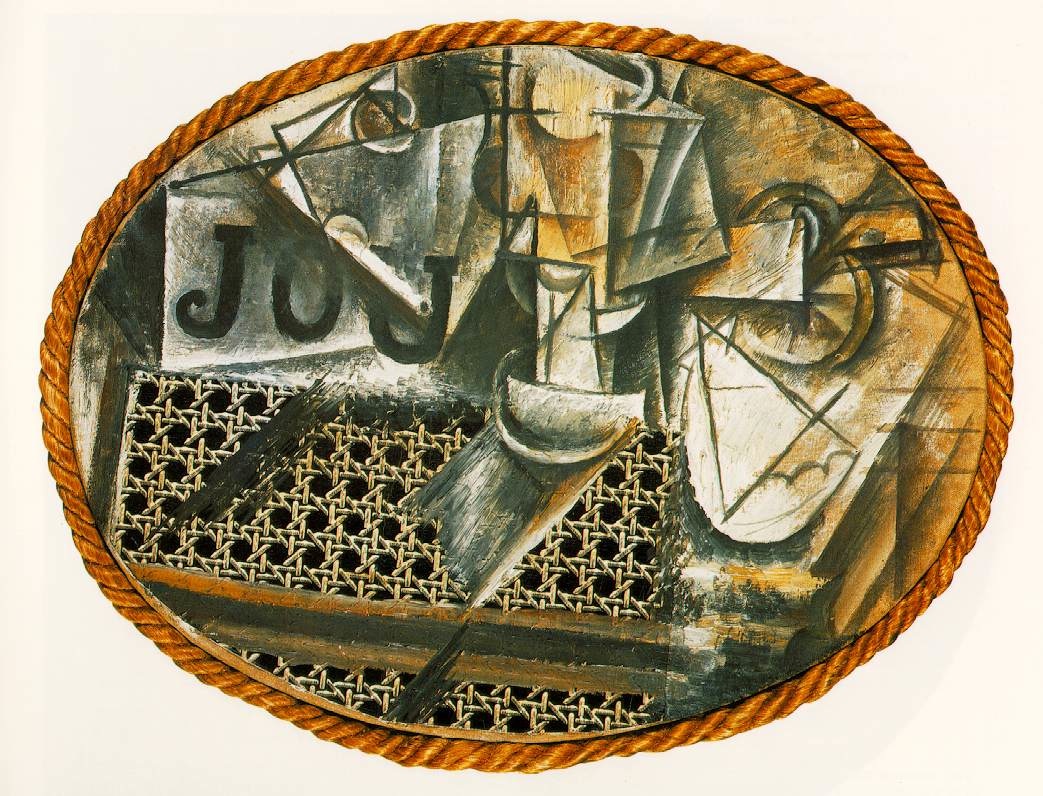
Picasso and the cubists   used text and images in collages referring to everyday objects and scenes.The definition of collage, as found in the Oxford English Dictionary, is “an abstract form of art in which photographs, pieces of paper, newspaper cuttings, string, etc. are placed in juxtaposition and glued to the pictorial surface.


Picasso  "Still-Life with Chair-Caning

 
Kurt Schwitters 

Taking their inspiration from both photographs and drawings made on location and the text and images found on route with their own collections students on the course at Preniac developed their own textiles collage pieces reflecting everyday references. Thankyou to the students who kindly allowed me to use images of their work.

 
Jug print and map (Barbara)                          Folding book form with a sea theme (Daphne)

 French Landscape (Roz)

 Marie Antoinette and Cahors (Ellen/right)


 Detail of blue collage (Jeannie)

Connected Details (Flo/right)
                  Pots and paper (Jenni)
  Riot (Jo)


Book form sketch (Gail)
This piece 'Text' contains my father's handwriting His birthday was the 11th September.

Detail of my quick stitch sketch of sunflowers.
 And finally some sunflowers, my name on a car plate!


Thanks to Bill and Liz for wonderful food, company and more.


I am returning to studio Preniac in May-June 2015..now all I have to do is plan what to do.


www.studiopreniac.com/


 ‎